How to Explore Barcelona’s Gothic Quarter Without the Crowds

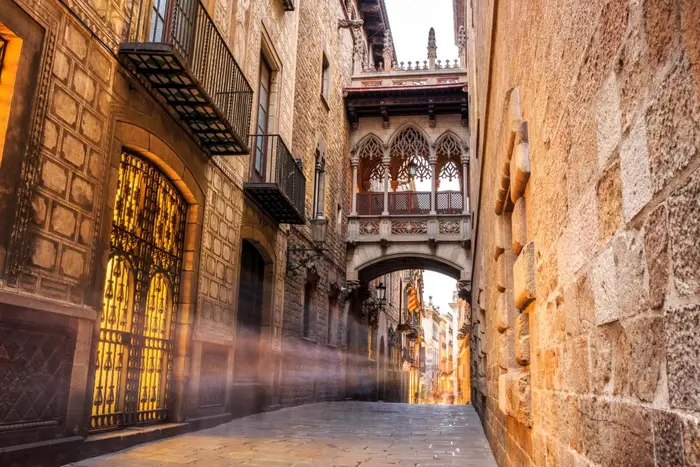
Picture this: You are standing in a narrow, 700-year-old stone alleyway in the heart of Barcelona's Barri Gòtic. The morning sun is just beginning to clip the edges of the ancient rooftops. You stop to take in the sheer scale of the architecture, only to be violently shaken out of the moment by a crackling megaphone. Suddenly, a 40-person tour group waves past, led by a guide hoisting a bright neon flag, marching at a brisk, uncompromising pace.
The reality of modern travel is that the world’s most breathtaking historic spaces are often overrun by rigid, high-volume group tours. But you don't have to be lectured to while shuffling shoulder-to-shoulder through a crowd. Exploring the Gothic Quarter independently isn't just about saving money; it’s about unlocking the freedom to pause, take a detour for a cortado, and let the city reveal itself to you on your own terms.
To truly experience the mystery and architectural brilliance of the old city without the chaos, you just need a localized roadmap, an insider's eye for detail, and the right strategy.
1. Cracking the Gothic Quarter Clock: The Golden Windows
You don’t need a secret key to get the Gothic Quarter entirely to yourself; you simply need to understand the rhythm of the city. To outsmart the massive cruise ship excursions and morning tour blocks, target these two specific windows:
- The Dawn Walk (7:00 AM – 9:00 AM): This is the ultimate insider window. The streets are completely clear of souvenir vendors and large groups. The only sounds you will hear are your own footsteps echoing off the medieval masonry and the rattle of metal shutters as local bakeries prepare fresh xuixos. The morning light filtering down the narrow passages creates an unmatched, cinematic atmosphere for photography.
- The Midnight Stroll (After 11:00 PM): Once the dinner rush subsides, the Gothic Quarter undergoes a dramatic shift. The yellow streetlights cast deep shadows across the stone arches, leaning heavily into the quarter's mysterious, historic atmosphere.
2. Hidden in Plain Sight: The Inside Secrets
Most travelers walk straight down the main thoroughfares, checking off monuments from a basic checklist while completely missing the rich layers of history buried right next to them. To feel like a true insider, skip the crowded open squares and look for the architectural anomalies tucked away in plain sight.
The Secret Columns of Carrer de Paradís
When navigating the winding streets near the Barcelona Cathedral, pull away from the main path and head toward the unassuming residential entrance at Carrer de Paradís 10. Step inside the small medieval courtyard, look down, and look up.
Buried nine meters below the modern street level are four massive, beautifully preserved 2,000-year-old Corinthian columns. These are the remnants of the ancient Temple of Augustus from when Barcelona was the Roman military colony of Barcino. Most tourists walk right past the heavy wooden door, entirely oblivious that the foundation of the Roman Empire is resting just a few feet away inside a residential patio.
The Turtle Mailbox at Casa de l'Ardiaca
As you walk past the Archdeacon’s House (Casa de l'Ardiaca), stop at the exterior wall to examine the stone modernist mailbox designed by architect Lluís Domènech i Montaner. It features an intricate carving of three swallows and a single stone turtle.
Local lore dictates the hidden meaning behind the art: justice should fly swiftly like the swallows, but bureaucratic paperwork moving through the legal system always moves at the frustrating speed of the turtle. Rubbing the turtle’s shell is said to bring good luck—a subtle ritual most hurried travelers blink and miss.
The Illusion of Pont del Bisbe
The neo-Gothic bridge stretching across Carrer del Bisbe (the Bishop's Bridge) is arguably the most photographed architectural landmark in the entire quarter.
Admires the bridge as a beautifully preserved 14th-century medieval relic.
Knows the bridge was actually built in 1928 for the Barcelona World Fair.
The bridge is a brilliant architectural illusion designed to make the neighborhood look significantly older than it actually is. If you look closely at the underside of the arch, you will spot a carved skull pierced by a dagger. Local superstition warns that looking directly into the skull's eyes brings misfortune—unless you actively walk backward beneath it.
3. Stepping Into the Shadows: The Silent Scars of History
To understand the raw soul of Barcelona, you must explore its darker historical chapters. Away from the bright storefronts of La Rambla lies a quiet sanctuary that holds one of the city's most intense narrative weights.
Venture deep into the old Jewish quarter along Carrer de Sant Sever until you hit a dead-end alleyway that opens up into the secluded Plaça de Sant Felip Neri.
visibilityLook closely at the church facade: Stand in the center of this incredibly quiet square, next to the octagonal stone fountain, and run your eyes over the violently gouged, scarred lower walls of the Baroque church.
Many generic guidebooks gloss over this space or claim these marks are from old executions. The reality is far heavier: these deep craters are the direct shrapnel wounds from a devastating 1938 aerial bombardment by Franco's fascist forces during the Spanish Civil War, an attack that claimed the lives of 42 civilians, most of whom were school children taking refuge in the church basement.
Visiting this space early in the morning allows you to sit by the fountain in total silence, absorbing the historical weight of a landmark that large, noisy tour groups routinely disrupt.
4. Ditch the Megaphones: The Independent Manifesto
The magic of the Gothic Quarter isn't found in a series of dates scribbled on a smartphone screen, nor is it found while trying to hear an exhausted tour guide over the chatter of a massive crowd. The magic happens when you have the context to decode the stones beneath your feet entirely at your own pace.
You deserve to explore autonomously without sacrificing deep, authentic storytelling. You should be able to step out of the tourist stream, duck into an underground vermouth bar, and seamlessly pick up the historical narrative the exact second you choose to resume walking.
Experience Barcelona with Voiceroam
Don't spend your journey staring down at a blog post or wrestling with rigid tour schedules. Voiceroam transforms static city streets into deeply immersive audio documentaries triggered automatically by smart GPS.